Fluid Painting for Beginners (Easy Step-by-Step Acrylic Pour Tutorial)
Learn fluid painting for beginners with this easy step-by-step acrylic pour tutorial. Simple techniques, tips, and beginner-friendly ideas.
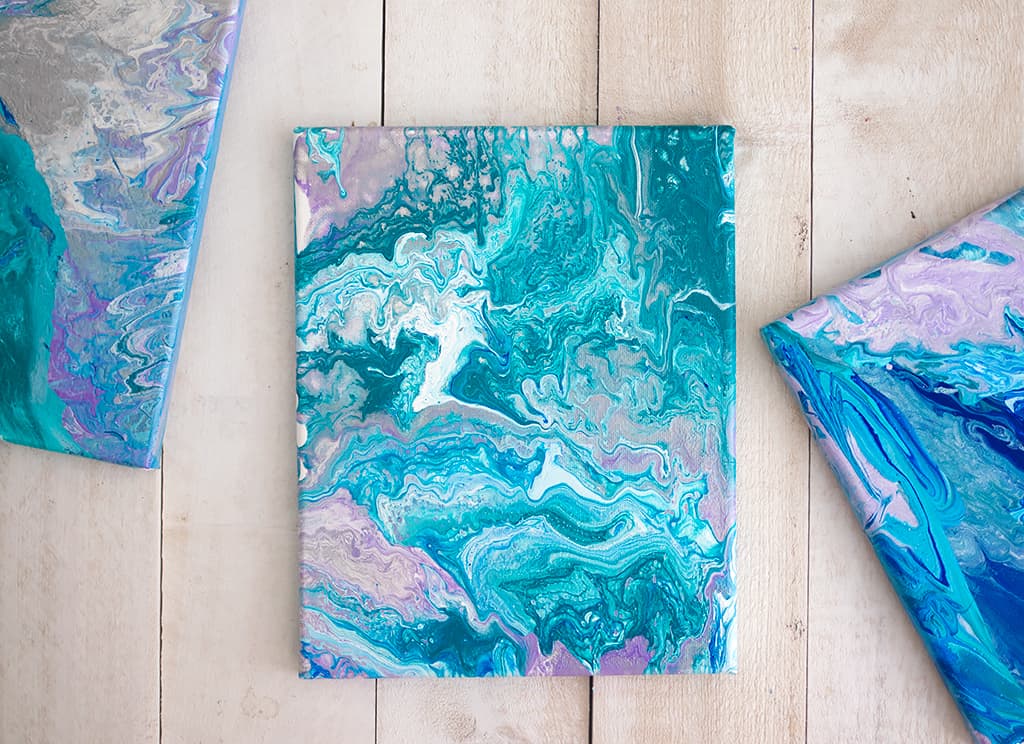
Want to try fluid painting but don’t know where to start? This beginner-friendly acrylic pour tutorial shows you exactly how to create beautiful, easy designs step by step.
Fluid painting uses acrylic paints that have a runny or thin consistency. They’re designed to flow and spread easily without sacrificing color intensity. Fluid acrylics are ideal for pouring or dribbling paint, rather than applying it with a brush.
You can either use store-bought Pouring Paint or mix your own using acrylic paint and a pouring medium. Mixing your own can be a little tricky. Mix the paints too thick and they won’t pour properly. Mix them too thin and they’ll act like watercolors, giving a faint wash to the canvas instead of vibrant color.
One of the things I love about fluid painting is that anyone can do it! You don’t need to be an artist to create a beautiful painting!
What Is Fluid Painting?
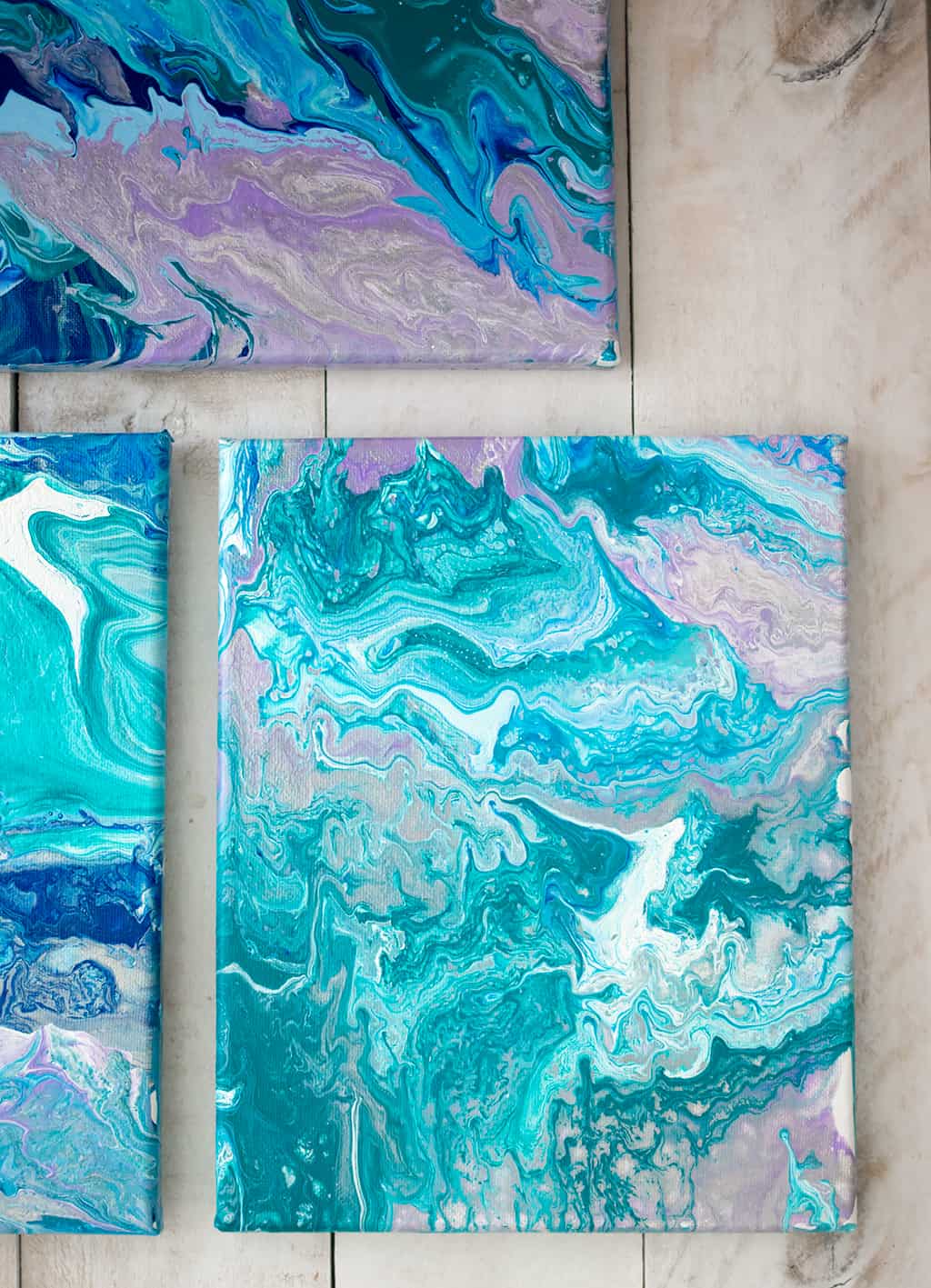
Fluid painting, also known as acrylic pour painting, is a beginner-friendly art technique that involves pouring liquid paint onto a surface to create abstract designs. Instead of using brushes, you allow the paint to flow and blend naturally, creating unique patterns and color combinations every time.
One of the reasons fluid painting is so popular with beginners is that it doesn’t require advanced drawing skills. The movement of the paint does most of the work for you, making it an easy and relaxing creative project. If you enjoy simple, hands-on DIY projects, fluid painting is a great place to start.
Supplies You Need for Fluid Painting
Before you begin, it’s helpful to gather all of your materials so the process goes smoothly. Fluid painting uses a few basic supplies that are easy to find and beginner-friendly.
You’ll need acrylic paint in your chosen colors, a pouring medium to help thin the paint, and a surface such as a canvas or wood panel. Many beginners also use plastic cups for mixing and pouring, along with craft sticks to stir the paint. Protecting your workspace is important as well, since this technique can get messy.
If you’re new to DIY projects, starting with simple, affordable materials will make the process more enjoyable and less intimidating.
Fluid Painting for Beginners (Easy Step-by-Step Acrylic Pour Tutorial)
Supplies needed:
Plastic cups
Plastic to use as a tarp (I used a garbage bag)
Note- Wrapped canvases (with the staples in the back) are the best to use because they can be hung on the wall without a frame.
Fluid Painting for Beginners (Easy Step-by-Step Acrylic Pour Tutorial)
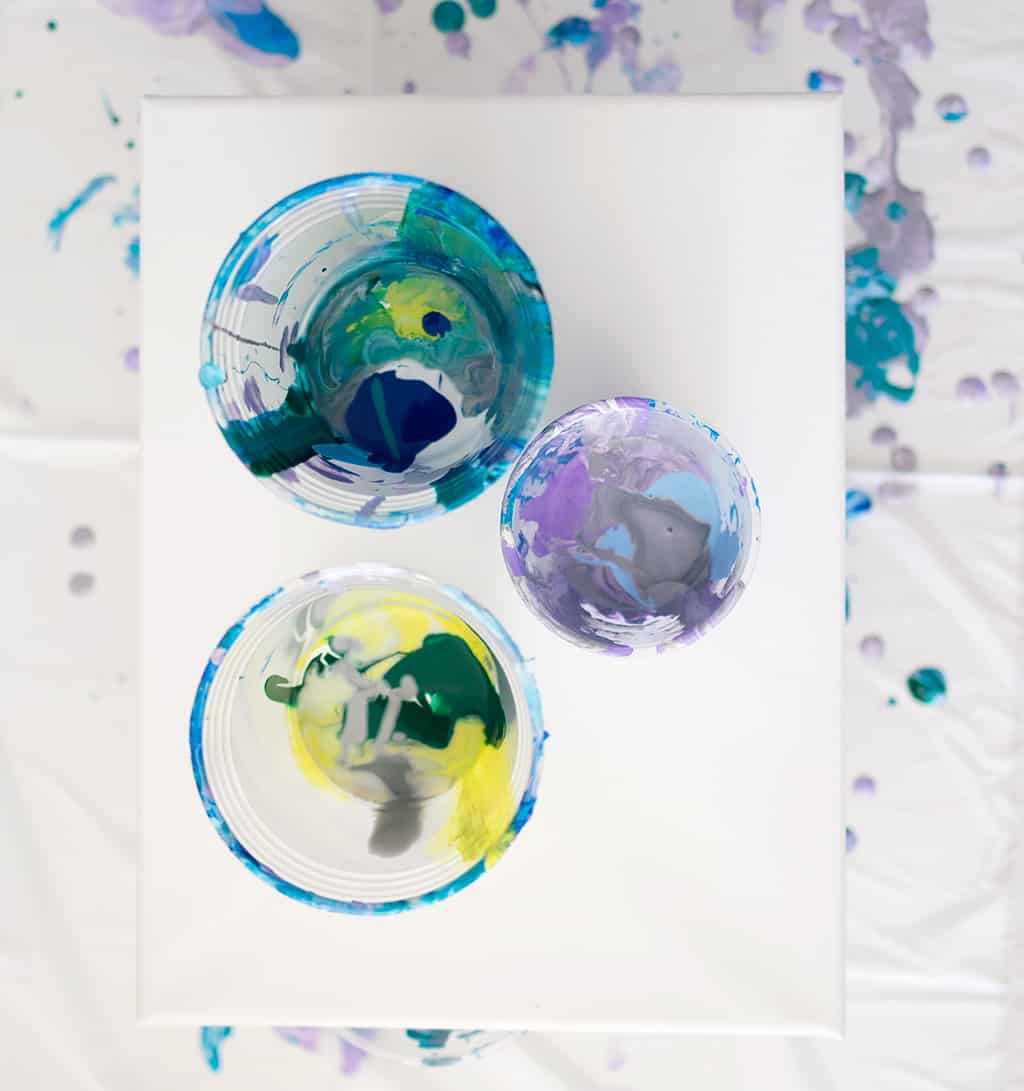
The first step is to paint the canvas with a thin coat of Gesso. Gesso acts as a primer and it makes the paint adhere to the canvas better. Let the canvas dry.
Squirt some paint into the cups. I use 3-4 complimenting colors per cup, but it’s up to you how much you’d like to use and what colors. A big part of fluid painting is experimenting!
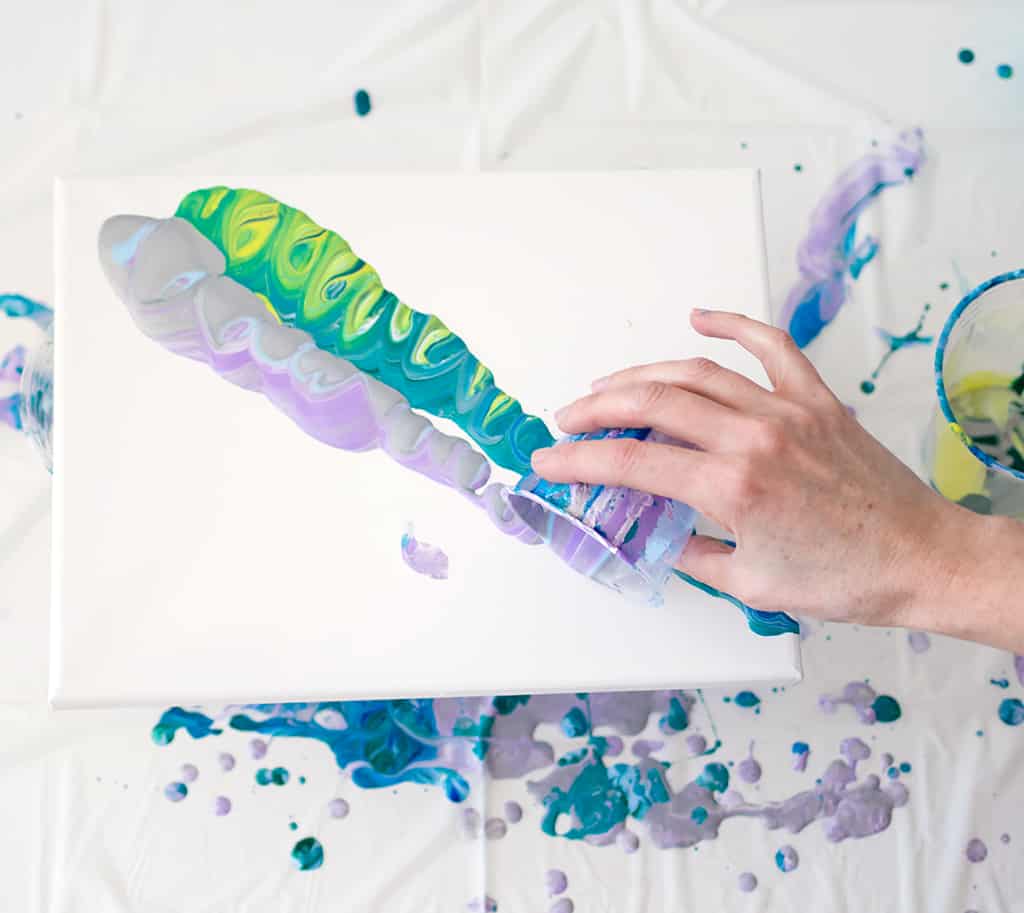
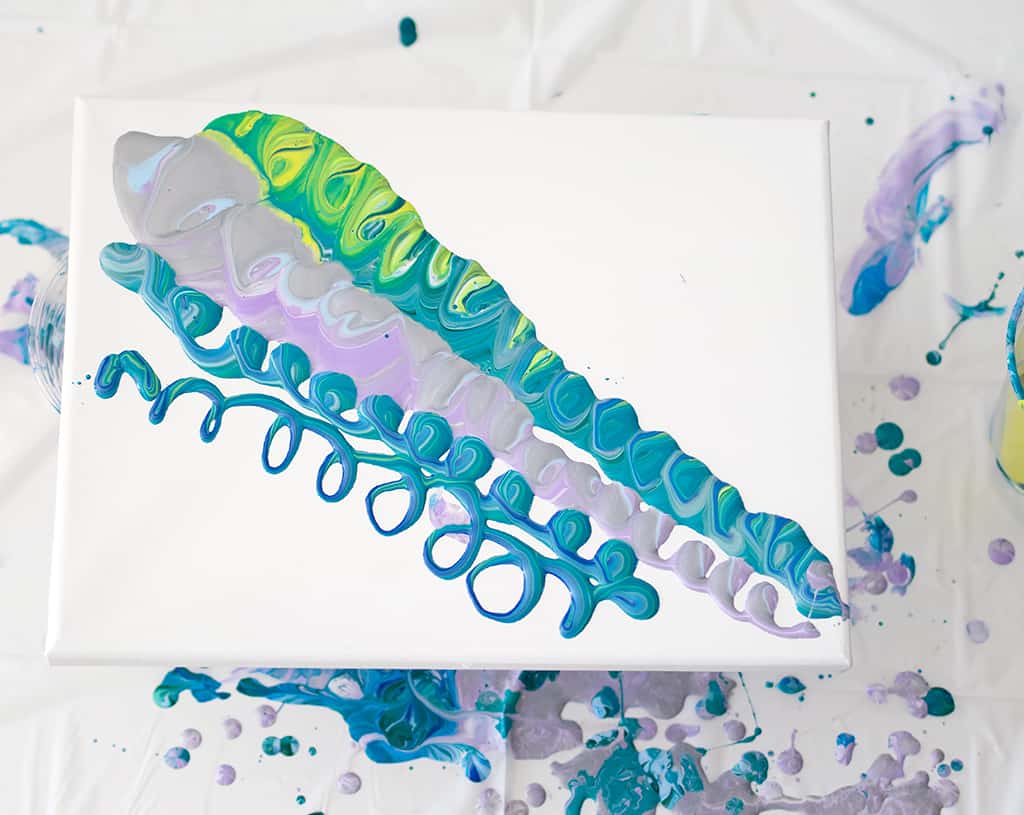
Pour the paint on the canvas. There are many different options! A few are: pouring the paint in a pool or swirling it in designs across the canvas.
I swirled the paint in ribbons across the canvas.
Looking for more painting DIY projects?
Rust-Oleum Outdoor Fabric Paint Review
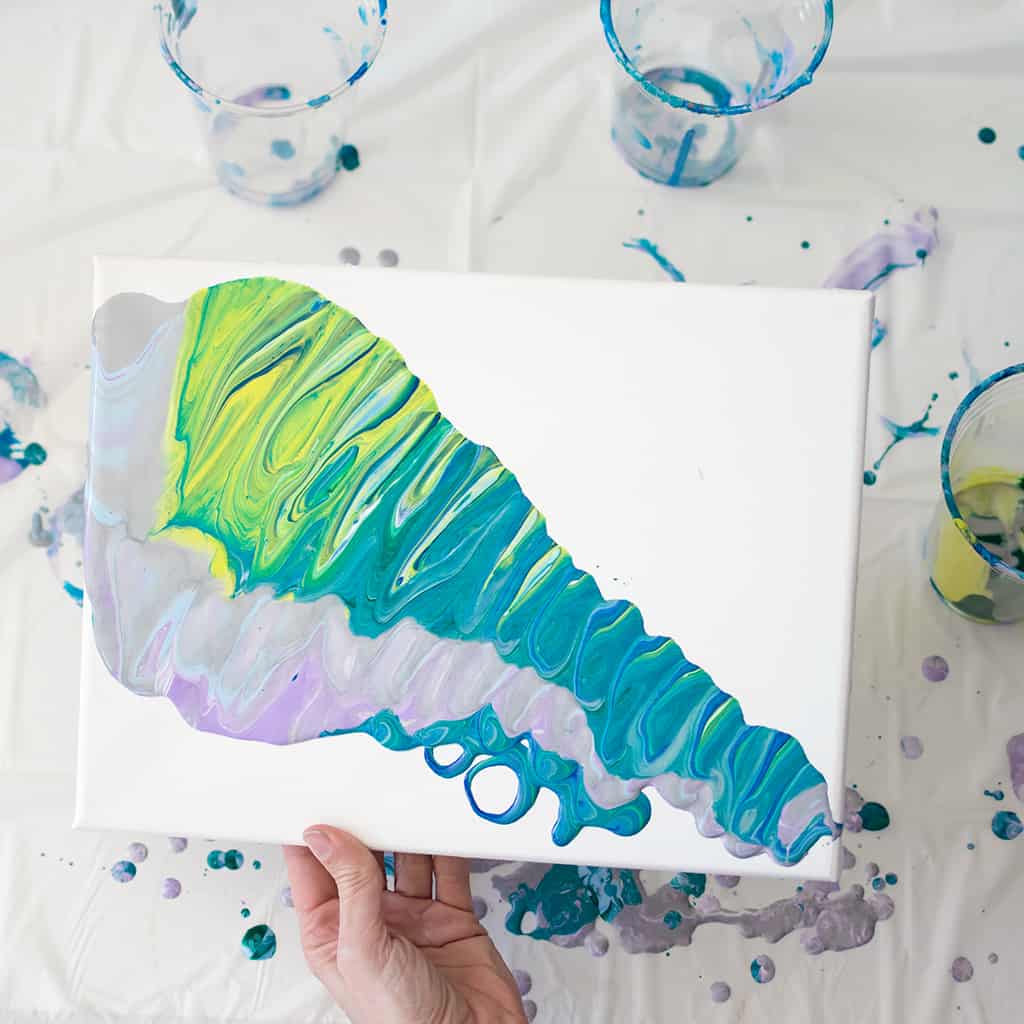
Next comes the fun part! Tilt the canvas to move the paint around.
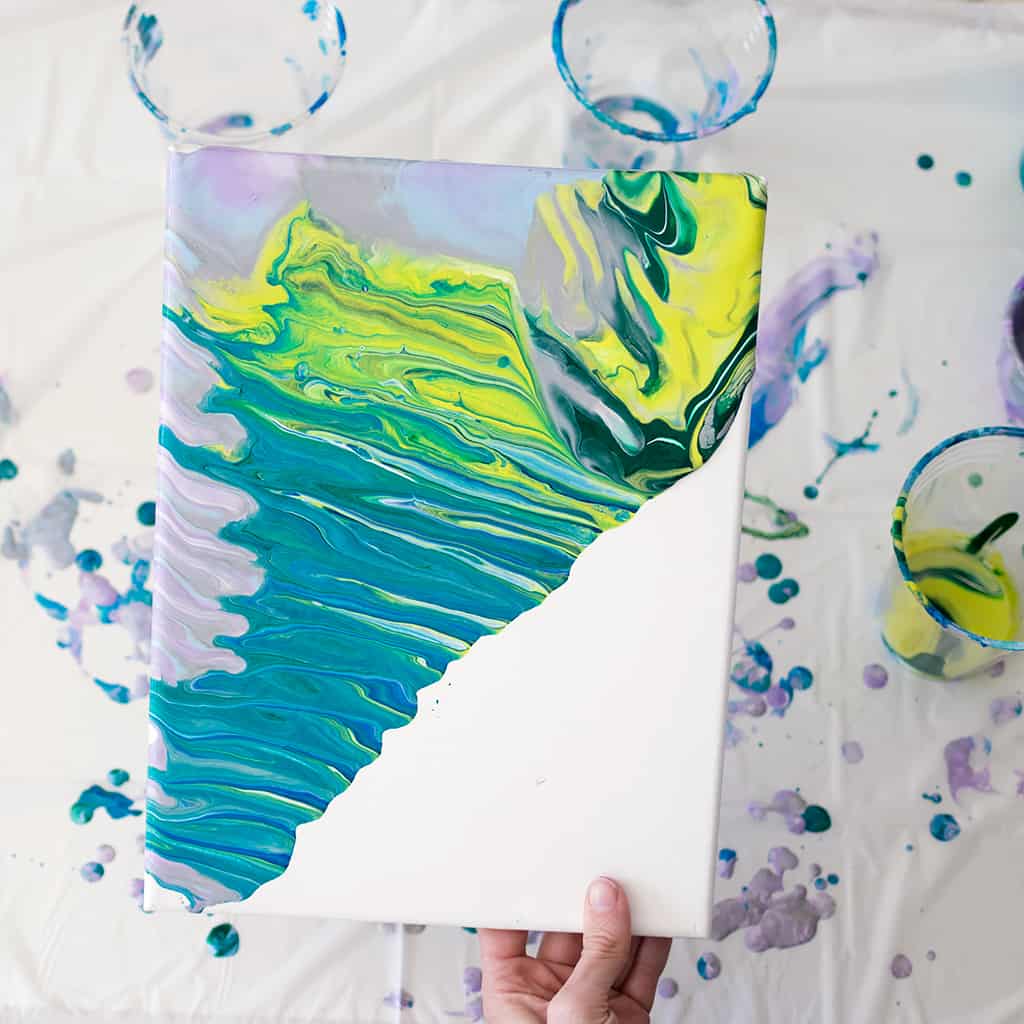
You can pour on more paint as you go to cover the canvas. The paint will run off the edge. It’s totally fine, that’s what the plastic tarp is for!
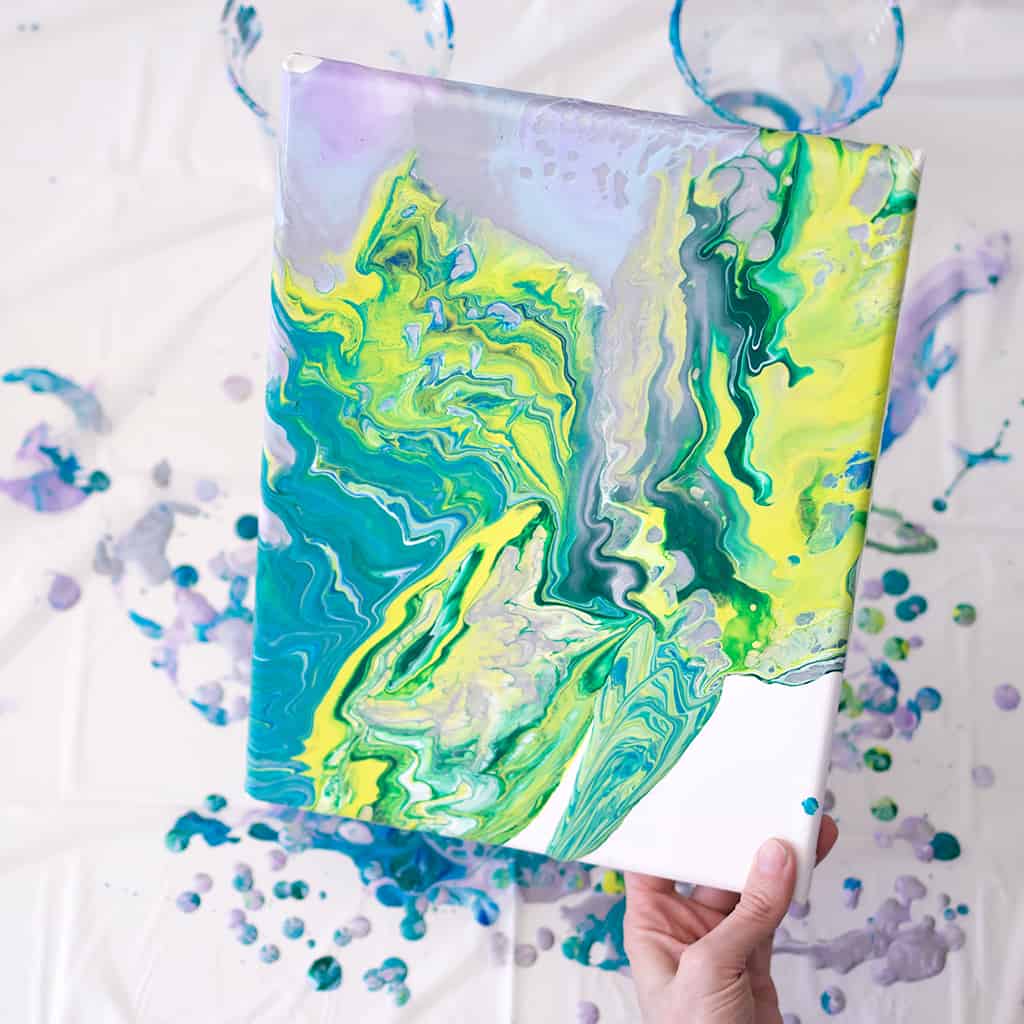
Keep tilting the canvas and adding new paint (as needed) until the canvas is covered.
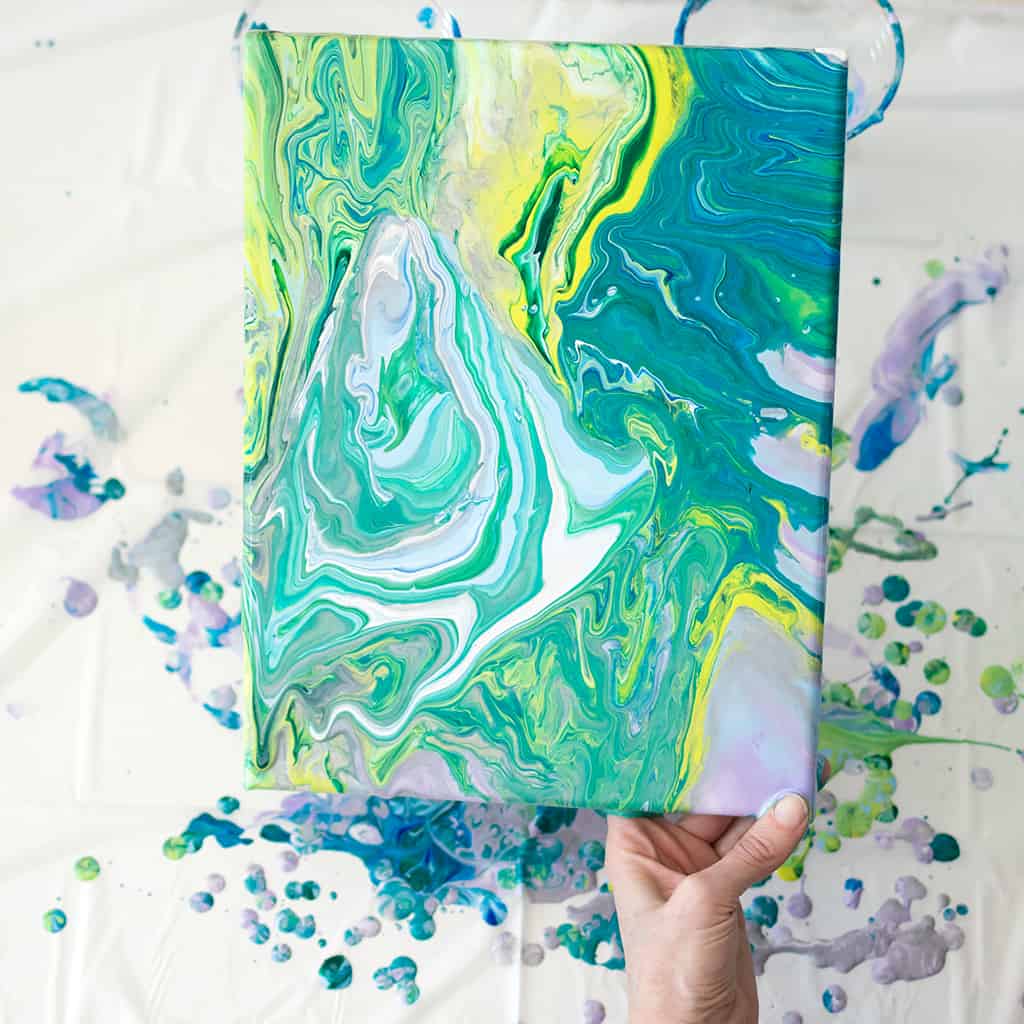
Excess paint running down the edges of the canvas can be wiped off with your fingers. Set the canvas down on top of two plastic cups to dry. The canvas will take 12-24 hours to dry so it’s best to leave it in a spot where kids and pets can reach it.
Easy Fluid Painting Techniques to Try
There are several beginner-friendly fluid painting techniques you can experiment with once you get comfortable. The dirty pour is one of the simplest methods, where multiple paint colors are layered in a cup and poured onto the canvas all at once. This creates a marbled effect with minimal effort.
Another popular technique is the flip cup method, where you place a cup of layered paint upside down on the canvas and lift it to release the paint. This often results in bold, organic patterns.
As you gain confidence, you can experiment with different pouring styles to create a variety of looks without needing advanced skills.
Common Fluid Painting Mistakes to Avoid
One of the most common mistakes beginners make is using paint that is too thick or too thin. If the paint is too thick, it won’t flow properly, and if it’s too thin, the colors can become muddy. Finding the right consistency takes a little practice but makes a big difference in your results.
Another mistake is overworking the paint. It can be tempting to keep tilting and adjusting your canvas, but too much movement can blend the colors too much and lose the design. Letting the paint move naturally often creates the best results.
Taking your time and keeping your process simple will help you avoid frustration and enjoy the experience.
Tips for Better Fluid Painting Results
For the best results, work on a level surface so the paint spreads evenly. Protect your workspace ahead of time, since fluid painting can be messy. Using a limited color palette can also help keep your design looking clean and cohesive.
It’s also helpful to practice on smaller canvases before moving on to larger projects. This allows you to experiment with techniques without using too many materials.
Most importantly, don’t worry about perfection. Fluid painting is meant to be creative and expressive, and each piece will turn out differently.
FAQ: Fluid Painting for Beginners (Easy Step-by-Step Acrylic Pour Tutorial)
What is fluid painting for beginners?
Fluid painting for beginners, often called acrylic pour painting, is a simple art technique where liquid acrylic paint is poured onto a surface to create abstract designs. Instead of using brushes, the paint flows and blends naturally, which makes it perfect for beginners who want to create something beautiful without needing advanced artistic skills. Each piece turns out unique, which is part of what makes fluid painting so fun and rewarding.
What kind of paint do you use for fluid painting?
Most beginners use acrylic paint because it’s affordable, easy to work with, and widely available. The paint is typically mixed with a pouring medium to create a smooth, fluid consistency that spreads easily across the canvas. Using the right consistency is important because it helps the paint flow properly and prevents colors from becoming too muddy.
Do you need a pouring medium for acrylic pour painting?
Yes, a pouring medium is usually recommended for fluid painting. It helps thin the paint while maintaining the pigment and prevents cracking as the paint dries. While some beginners try using water alone, a proper pouring medium gives more consistent and professional-looking results, especially when layering colors.
How do you get cells in fluid painting?
Cells are the small, round patterns that appear in fluid paintings and give them a textured look. They are created when different paint densities react with each other during the pouring process. Some artists use additives like silicone oil to encourage cell formation, but even without additives, you can still achieve interesting effects by experimenting with paint consistency and pouring techniques.
Why do my fluid painting colors look muddy?
Muddy colors usually happen when too many colors are mixed together or when the paint is overworked. Tilting the canvas too much or stirring colors excessively can cause them to blend into a dull shade instead of staying vibrant. To avoid this, try using fewer colors and allow the paint to move naturally without over-manipulating it.
How long does fluid painting take to dry?
Fluid paintings typically take 24 to 72 hours to dry to the touch, depending on how thick the paint layers are and the humidity in your environment. Because the paint is applied in liquid form, it takes longer to fully cure than traditional brush painting. It’s important to leave your painting undisturbed while it dries to prevent smudging or shifting.
Can you do fluid painting on anything besides canvas?
Yes, fluid painting can be done on a variety of surfaces including wood panels, ceramic tiles, and even glass. The key is to use a smooth, non-porous surface or properly prepare the surface beforehand so the paint flows evenly. Canvas is the most common choice for beginners because it’s easy to work with and widely available.
Is fluid painting messy?
Fluid painting can be messy because the paint is poured and spread freely across the surface. It’s a good idea to protect your workspace with plastic or a drop cloth before you begin. Wearing gloves and working in a designated area can help keep cleanup simple and stress-free.
Is fluid painting easy for beginners?
Yes, fluid painting is considered one of the easiest art techniques for beginners. Since it doesn’t require precise brushwork or drawing skills, it allows you to focus on color and movement instead. With just a few basic supplies and simple techniques, most beginners can create impressive results on their first try.
What is the easiest fluid painting technique to start with?
The easiest technique for beginners is a simple pour or dirty pour method. These techniques require minimal setup and allow the paint to create natural patterns as it flows across the canvas. Starting with simple techniques helps build confidence before trying more advanced methods like flip cups or layered pours.
Looking for more Easy Craft Projects like How to Fluid Paint for Total Beginners?
How to Make Twine Out of Fabric Scraps
How to Make a Kid’s Art Display
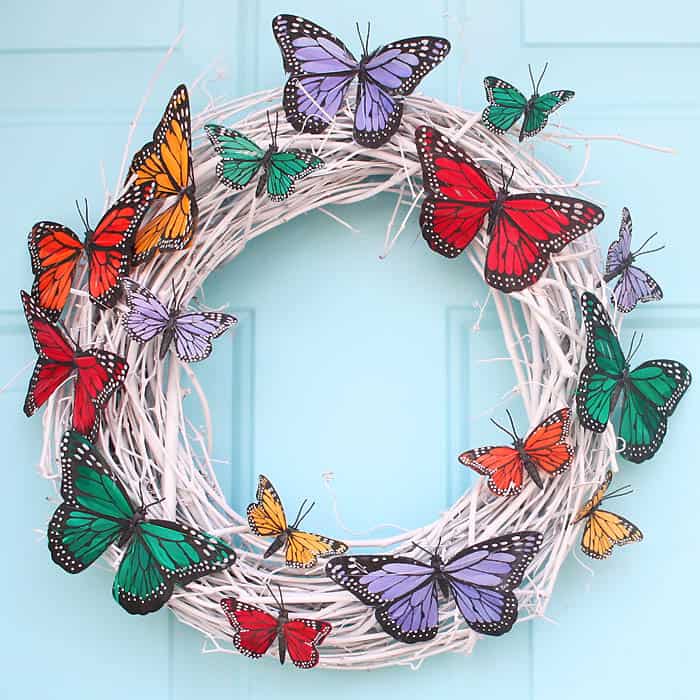
How to Make a Butterfly Wreath
✨ I’d love to see what you’re making! ✨
If you’ve tried one of my knitting patterns, crochet projects, DIYs, or recipes, share your finished project on Instagram and tag me so I can see it 💛
There’s nothing better than seeing your creations come to life—from cozy knits to delicious recipes and everything in between. It truly makes my day!
Tag me @ginamicheleny so I can share your work and cheer you on!
Happy making!