Easy Scallop Stitch Knitting Pattern (Beginner-Friendly Textured Stitch Tutorial)
Learn how to knit the Easy Scallop Stitch Knitting Pattern with this step-by-step tutorial. This beginner-friendly stitch creates beautiful shell-like texture perfect for scarves, blankets, washcloths, and more.
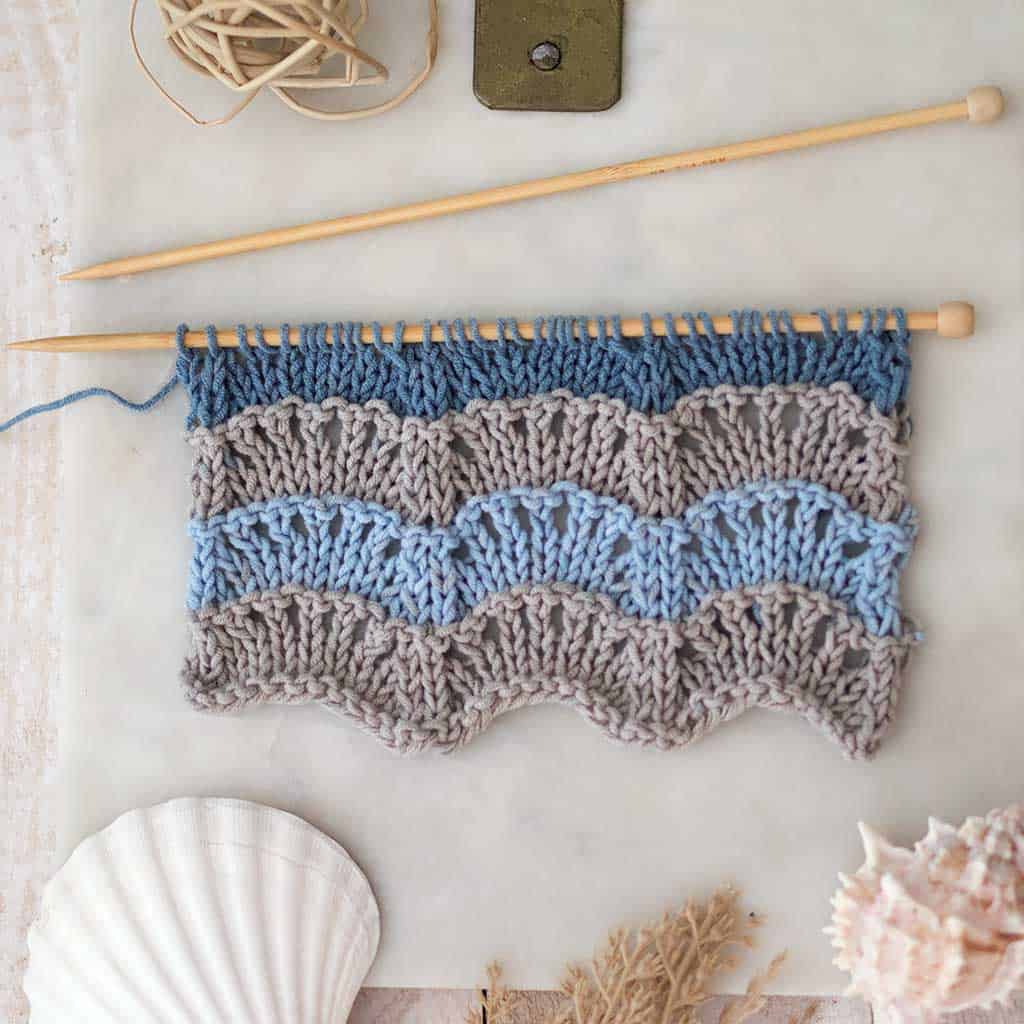
The Scallop Stitch is a beautiful textured knitting pattern that creates rows of soft, curved shapes that resemble seashells or scalloped edges. While the finished fabric looks intricate and decorative, the stitch itself is surprisingly simple and repetitive, making it an excellent choice for adventurous beginners and experienced knitters alike.
If you’re looking for a stitch pattern that adds visual interest without requiring complicated charts or advanced techniques, the Scallop Stitch is a wonderful option. The textured waves formed by grouped stitches create a fabric that looks elegant enough for heirloom projects while remaining approachable for everyday knitting.
Whether you’re planning a cozy scarf, a lightweight throw, a baby blanket, or a decorative home décor project, this stitch pattern offers plenty of versatility. In this tutorial, you’ll learn how the stitch works, what supplies you’ll need, tips for success, and project ideas that showcase the stitch beautifully.
What Is the Scallop Stitch?
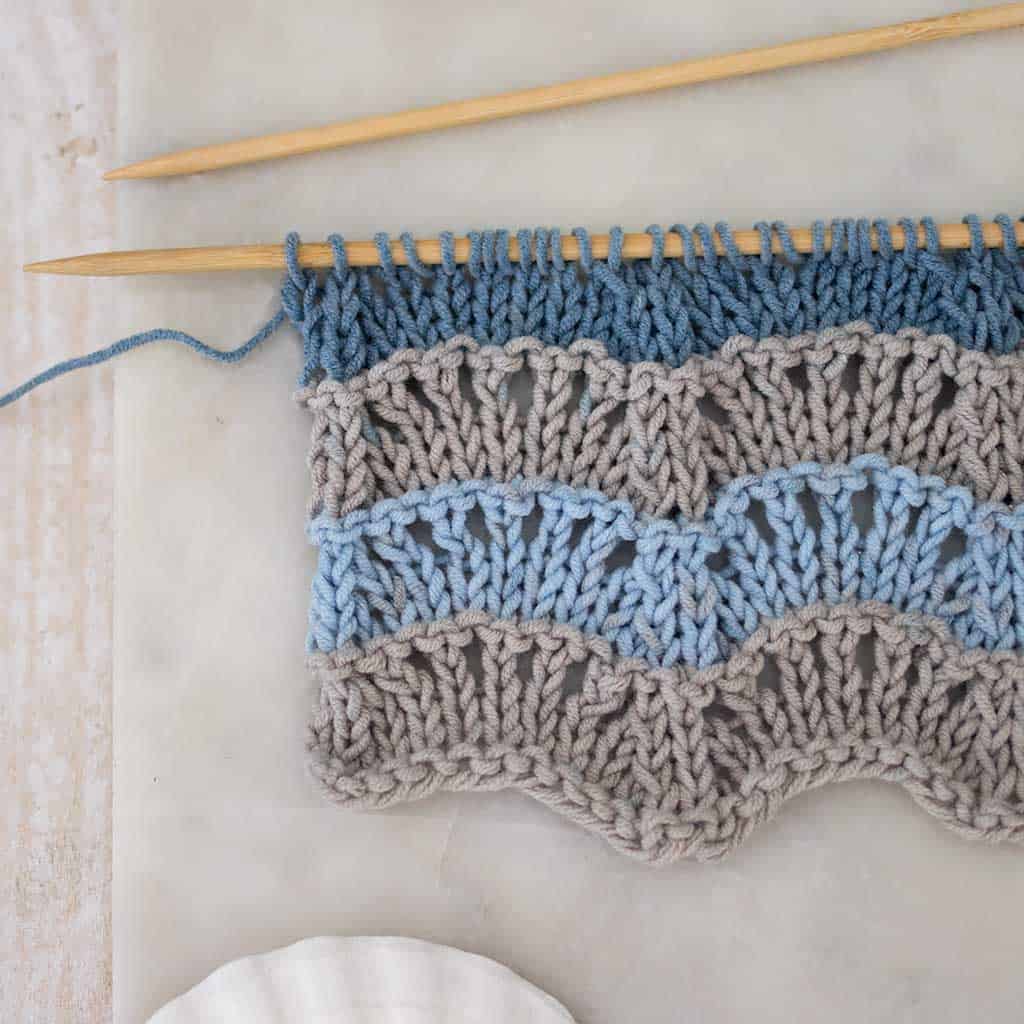
The Scallop Stitch is a textured knitting pattern that creates repeating shell-like motifs across the fabric. The curved shapes are formed through a combination of increases and decreases that gather stitches together and then fan them back out.
The result is a fabric with gentle waves and dimensional texture that stands out beautifully in both solid and variegated yarns.
Unlike some lace stitches that create large open holes, the Scallop Stitch maintains a substantial fabric while still offering visual movement and interest. This makes it suitable for a wide variety of knitting projects, from accessories to blankets and even garments.
Because the repeat is easy to memorize, it’s also a relaxing stitch pattern once you’ve completed a few rows.
Why You’ll Love the Scallop Stitch
There are many reasons knitters return to this stitch again and again:
Beautiful shell-like texture
Beginner-friendly pattern repeat
Creates eye-catching fabric
Great stitch definition
Works with many yarn weights
Perfect for blankets and scarves
Easy to customize
Looks impressive but is simple to knit
The stitch has a timeless look that works equally well in modern and traditional knitting projects.
Looking for free knitting patterns? Browse this full collection of easy knitting patterns you can start today:
50 Free Knitting Patterns You’ll Actually Want to Make (Beginner-Friendly)
10 Easy Baby Knitting Patterns for Beginners
10 Quick Summer Knitting Patterns
15 Easiest Free Knitting Patterns
15 Easy Summer Knitting Patterns You Can Make This Weekend
10 Easy Baby Knitting Patterns That Look Impressive (But Are Actually Beginner-Friendly)
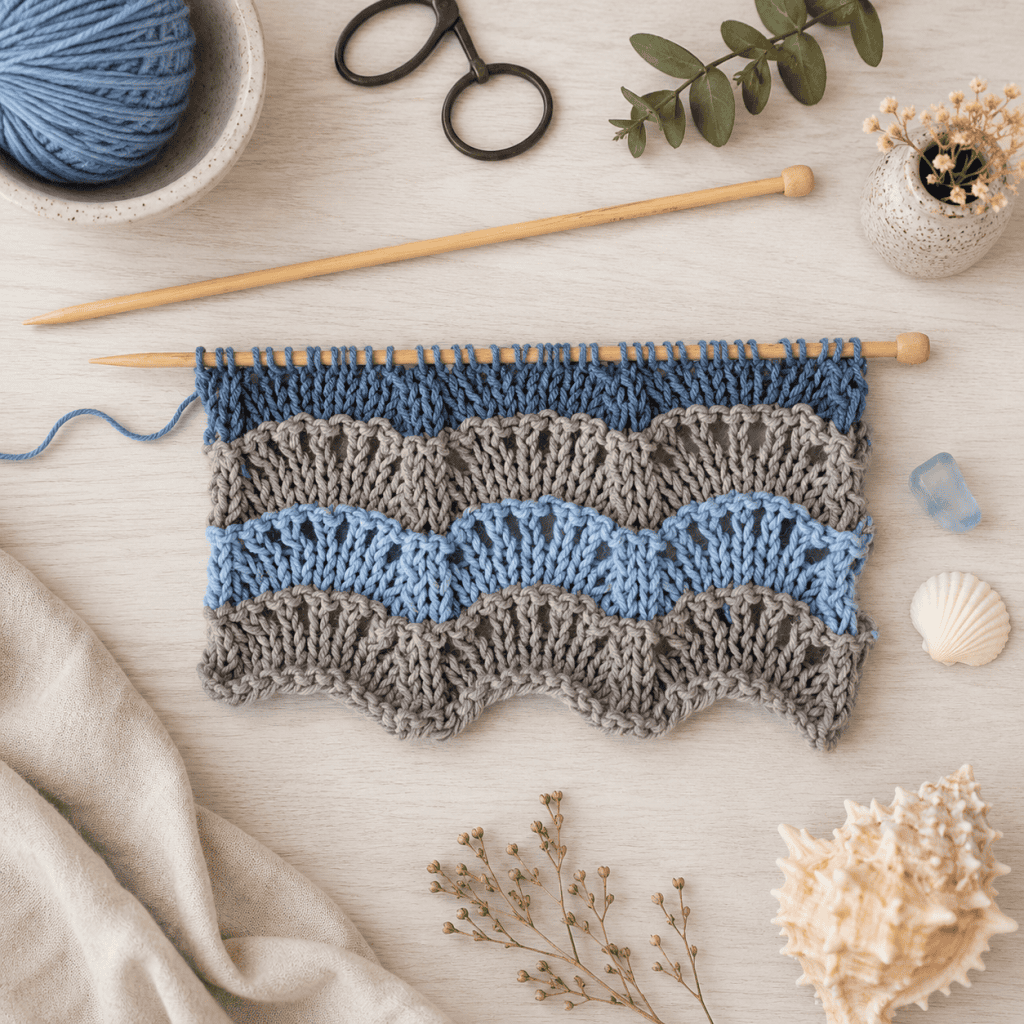
The design is created by repeating 6 rows. I changed the color of the yarn every 6 rows to emphasize the scallop pattern.
If you’re new to knitting, there are a few terms you may be unfamiliar with. I will explain them below and show you how they’re done in the accompanying video.
Abbreviation used in this pattern:
k2tog- knit 2 stitches together.
yo- means yarn over. Simply, pass the yarn over the right-hand knitting needle. A new loop is created on the next row.
Sl1 K1 psso: Slip 1, Knit 1, pass slip stitch over. Take the stitch and slip it from one needle to another. Knit the next stitch and remove from needle. Take the slipped stitch and put it over the knit stitch.
Easy Scallop Stitch Knitting Pattern (Beginner-Friendly Textured Stitch Tutorial)
✨ Ad-Free Printable Pattern Available! ✨
The ad-free, printable PDF of the patterns found on this site are now available for purchase at Shop Gina Michele—perfect for easy, distraction-free stitching.
Looking for more projects? Browse the Knitting Pattern Directory to explore all my knitting patterns in one place.
(As an Amazon associate, I earn from qualifying purchases)
Yarn: Since this is a lacey stitch, it works best with lighter weight yarn. (I used Caron Cakes Cotton in Nested Blue.)
Needles: I used size US 7 single point knitting needles. Be sure to use knitting needles that correspond to the yarn weight you chose.
Cast on multiples of 13 + 2 (I casted on 28 stitches for the video tutorial and 41 stitches for the pictures shown in this post)
Row 1: (right side) k1, *sl 1, k1, psso, k9, k2tog; rep from * to last st, k1.
Row 2: Purl across.
Row 3: k1, *sl 1, k1, psso, k7, k2tog; rep from * to last st, k1.
Row 4: Purl across.
Row 5: k1, *sl 1, k1, psso, yo, [k1, yo] 5 times, k2tog; rep from *to last st, k1.
Row 6: Knit across.
Continue working these 6 rows for the pattern. You can switch to a new color yarn every 6 rows or you can use the same color throughout.
Understanding How the Scallop Stitch Works
The magic of the Scallop Stitch comes from balancing increases and decreases.
Groups of stitches are decreased together to create valleys in the fabric. These are followed by increases that spread stitches back out and create the rounded shell shapes.
This combination produces the distinctive scalloped appearance that gives the stitch its name.
While the pattern may look complicated at first glance, once you understand how the increases and decreases work together, the stitch becomes much easier to follow.
Why Texture Matters in Knitting
Textured stitches like the Scallop Stitch can completely transform an otherwise simple project.
Instead of relying on color changes or complicated shaping, texture creates visual interest directly within the fabric itself.
Benefits of textured stitch patterns include:
More visual appeal
Increased depth and dimension
Better stitch definition
Greater interest in solid-colored yarns
Professional-looking finished projects
This makes the Scallop Stitch especially useful when working with simple yarn colors that allow the texture to shine.
Best Yarn Choices for the Scallop Stitch
Although this stitch works with many yarns, some options showcase the texture particularly well.
Worsted Weight Yarn
Worsted weight yarn offers excellent stitch definition and is one of the easiest yarns for learning the pattern.
Cotton Yarn
Cotton highlights every detail of the stitch and works beautifully for dishcloths, washcloths, and table runners.
Merino Wool
Merino wool provides softness while maintaining crisp texture.
Acrylic Yarn
Acrylic is budget-friendly and ideal for larger projects such as blankets.
Wool Blends
Blended yarns offer durability and softness while maintaining good stitch visibility.
Avoid highly fuzzy yarns when learning the pattern because they can hide the texture.
Projects That Look Beautiful in Scallop Stitch
One of the reasons knitters love this stitch is its versatility.
Scarves
The repeating shell pattern creates an elegant scarf that looks much more complicated than it actually is.
Baby Blankets
The textured fabric adds interest while remaining soft and cozy.
Throw Blankets
The stitch scales beautifully for larger projects.
Washcloths
Cotton washcloths are an excellent way to practice the stitch while creating useful handmade gifts.
Pillow Covers
Scallop Stitch adds gorgeous texture to home décor projects.
Shawls
The shell-like pattern creates beautiful drape in lightweight yarns.
Tips for Knitting the Scallop Stitch Successfully
Count Carefully
The stitch pattern relies on balanced increases and decreases, so accurate counting is important.
Use Stitch Markers
Markers can help identify pattern repeats and reduce mistakes.
Read Ahead
Before beginning each row, quickly review the instructions so you know what’s coming next.
Choose Smooth Yarn
Smooth yarn helps make the stitch pattern more visible.
Block Your Finished Piece
Blocking helps open the fabric and define the scallop shapes.
Common Mistakes and How to Avoid Them
Losing Track of Stitch Count
If your stitch count changes unexpectedly, check your increases and decreases.
Tight Tension
Tight knitting can reduce stitch definition.
Missing Increases
Forgetting an increase may distort the shell pattern.
Missing Decreases
Missing a decrease can cause the fabric to expand unintentionally.
Checking your work every few rows can help catch mistakes before they become difficult to fix.
Scallop Stitch vs. Wave Stitch
The Scallop Stitch is often compared to the Wave Stitch because both create flowing movement across the fabric.
However, there are some key differences.
Scallop Stitch
More textured
Defined shell shapes
Dimensional appearance
Great for blankets and accessories
Wave Stitch
More openwork
Airy lace texture
Lightweight fabric
Excellent for scarves and shawls
How to Use the Scallop Stitch in Modern Projects
Although the stitch has a classic appearance, it works wonderfully in modern knitting designs.
Try using it for:
Minimalist throw blankets
Neutral-toned pillows
Market bags
Modern baby blankets
Lightweight wraps
Table runners
The texture adds visual interest while maintaining a clean, contemporary look.
Stitch Patterns to Try Next
Once you’ve mastered the Scallop Stitch, consider exploring other beginner-friendly stitch patterns:
Easy Wave Stitch Knitting Pattern (Beginner-Friendly Lace Stitch Tutorial)
Easy Stockinette Chevron Stitch Knitting Pattern (Beginner-Friendly Zigzag Stitch Tutorial)
How to Knit the Drop Stitch (Easy Beginner-Friendly Knitting Tutorial + Video)
How to Knit the 3 Color Honeycomb Stitch (Easy Beginner Colorwork Tutorial)
9 Unique Knitting Stitches You’ll Want to Try (Easy, Beginner-Friendly + Beautiful Textures)
How to Knit the Hurdle Stitch (Easy Beginner Stitch Pattern You Can Learn Fast)
6 Easy Knitting Stitches Using Knit and Purl (Beginner-Friendly + Beautiful Texture)
How to Add Beads to Knitting (Easy Step-by-Step Guide for Beginners)
Learning multiple stitch patterns allows you to add variety to your knitting without significantly increasing complexity.
Free Knitting Patterns With Decorative Stiches
If you’re looking for beginner-friendly projects that showcase beautiful texture, be sure to explore:
Easy Irish Moss Hat Knitting Pattern (Beginner-Friendly + Knit in the Round)
Easy Waves Baby Blanket Knitting Pattern (Color Wave Design + Beginner-Friendly Knit)
Easy Feather and Fan Baby Hat Knitting Pattern (Flat Knit for Beginners)
Seed Stitch Baby Hooded Sweater Knitting Pattern
Mens Basketweave Hat Knitting Pattern
Mens Flat Knit Seed Stitch Hat
Easy Rib Stripe Hat Knitting Pattern (Beginner-Friendly + Knit in the Round)
Autumn Waves Scarf Knitting Pattern
These projects are excellent opportunities to practice decorative stitch patterns while creating useful finished items.
Why Beginners Should Learn Decorative Stitch Patterns
Many new knitters spend months working only in garter stitch and stockinette stitch.
While those foundational stitches are important, learning decorative stitch patterns early can make knitting more exciting and rewarding.
The Scallop Stitch is particularly beginner-friendly because it introduces concepts like shaping and texture without requiring advanced techniques.
Benefits include:
Improved knitting skills
Greater pattern confidence
More interesting projects
Better understanding of stitch structure
Expanded design possibilities
It’s a wonderful stepping stone between basic knitting and more advanced lace or cable work.
The Scallop Stitch is a beautiful textured knitting pattern that creates graceful shell-like motifs across the fabric. Its combination of simple increases and decreases produces a sophisticated look while remaining accessible to newer knitters.
Whether you’re making a cozy blanket, a lightweight scarf, a decorative pillow, or a practical washcloth, this versatile stitch adds depth, texture, and visual interest to your projects. Once you’ve completed a few repeats, you’ll likely find yourself reaching for this stitch again and again.
Grab your favorite yarn, cast on a practice swatch, and enjoy watching the elegant scalloped texture emerge row by row. The Scallop Stitch is proof that even simple knitting techniques can create truly stunning results.
✨ I’d love to see what you’re making! ✨
If you’ve tried one of my knitting patterns, crochet projects, DIYs, or recipes, share your finished project on Instagram and tag me so I can see it 💛
There’s nothing better than seeing your creations come to life—from cozy knits to delicious recipes and everything in between. It truly makes my day!
Tag me @ginamicheleny so I can share your work and cheer you on!
Happy knitting!