
5 Easy Knitting Stitches for Beginners (Step-by-Step Tutorial)
Learn 5 easy knitting stitches every beginner should know, including garter and stockinette stitch. Simple step-by-step instructions to help you start knitting today.
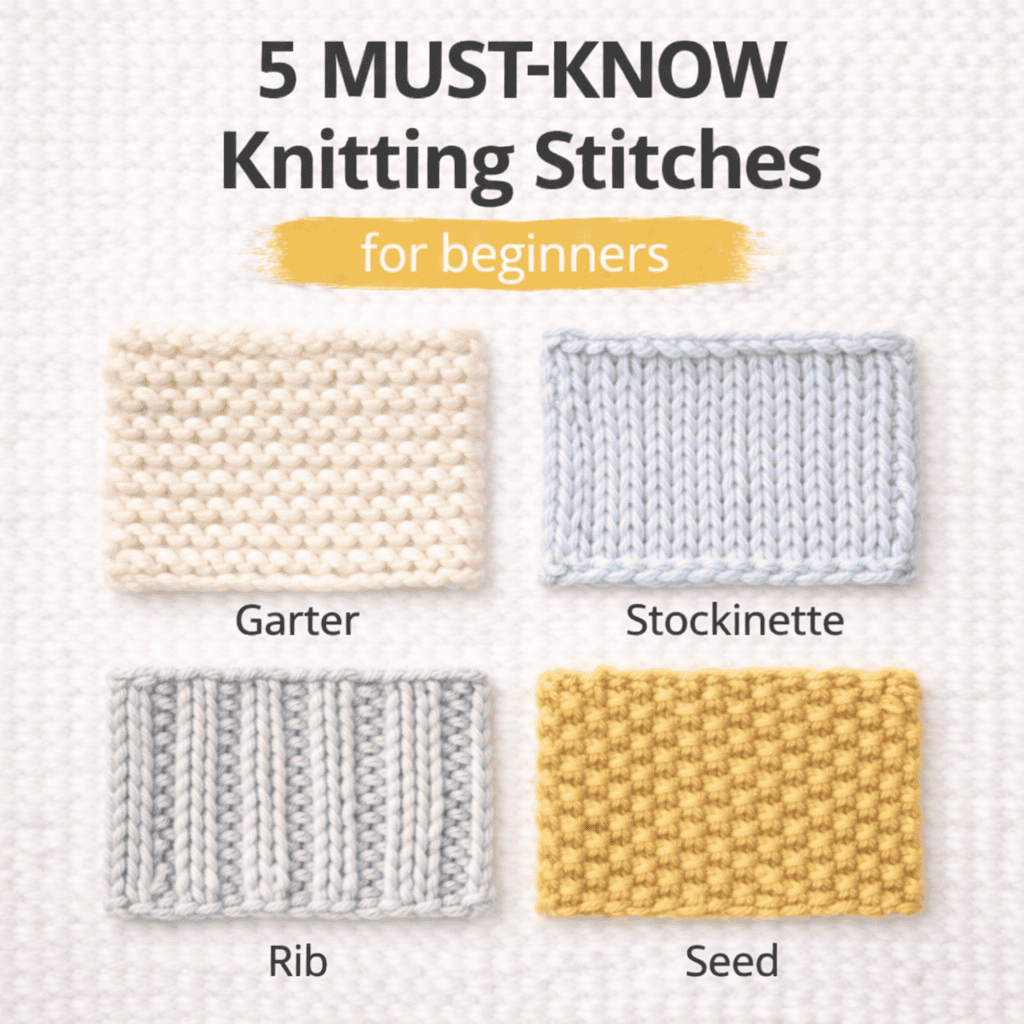
If you’re learning how to knit, mastering a few foundational stitches is the key to unlocking hundreds of beautiful projects. Every scarf, sweater, hat, and blanket is built from a combination of simple techniques, and once you understand the basics, knitting becomes much easier and more enjoyable.
In this guide to the 5 basic knitting stitches for beginners, you’ll learn the essential stitches that form the foundation of nearly every knitting pattern. Whether you’re picking up needles for the first time or looking to build confidence in your skills, these stitches will help you create polished, professional-looking projects.
If you’re brand new to knitting, you may also want to start with my How to Knit a Hat on Straight Needles and practice on easy projects like the Flat Knit Hat Pattern or Beginner Kid’s Flat Knit Ribbed Hat Pattern, which use these exact stitches.
Why Learning Basic Knitting Stitches Matters
Knitting may look complicated at first, but it is actually built on repetition. Once you learn how a stitch is formed, you’ll start to recognize patterns and understand how different textures are created.
The majority of beginner-friendly knitting patterns rely on just a few stitches repeated in different combinations. By learning these five stitches, you’ll be able to confidently follow patterns, troubleshoot mistakes, and even start creating your own designs.
These stitches are also incredibly versatile. You’ll see them used in everything from cozy scarves and blankets to more advanced garments and home decor projects.
KEEP IN TOUCH! FOR MORE INSPIRATIONS, PROJECTS, AND FREE KNITTING PATTERNS, SIGN UP FOR OUR WEEKLY NEWSLETTER:
5 Easy Knitting Stitches for Beginners (Step-by-Step Tutorial)
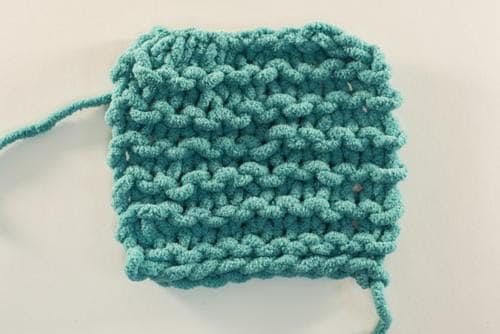
Garter Stitch (or Knit Stitch)
The knit stitch is the most basic and essential stitch in knitting. It is often the very first stitch beginners learn and forms the backbone of many simple patterns.
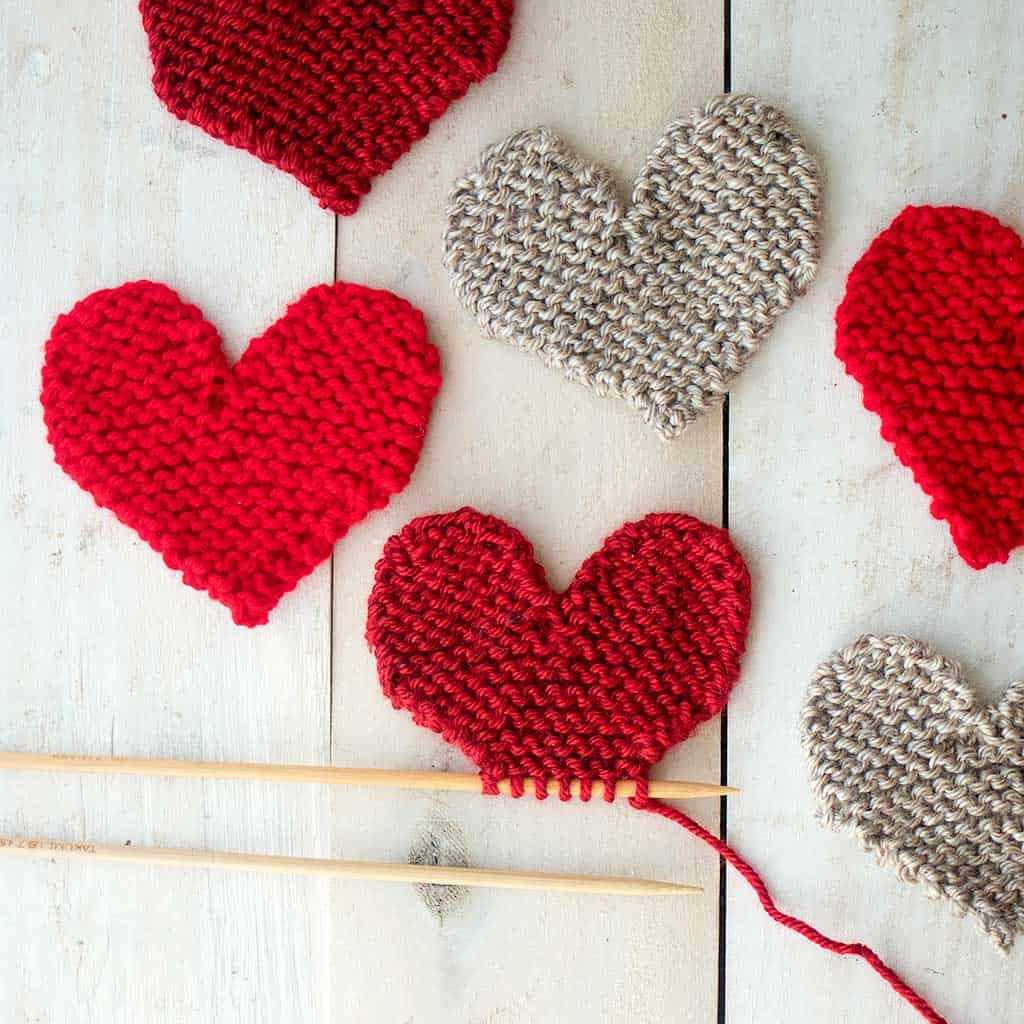
When you knit every row, you create garter stitch, which produces a soft, stretchy fabric with a slightly bumpy texture. This stitch is perfect for beginner projects because it is easy to memorize and forgiving if you make small mistakes.
You’ll find the knit stitch used in a wide variety of patterns, including beginner-friendly projects like the One Piece Garter Stitch Baby Sweater and Easy Garter Stitch Tank Knitting Pattern. Once you feel comfortable with this stitch, you’ll be able to create simple scarves, dishcloths, and blankets with ease.
How to Knit the Garter Stitch
Cast on any number of stitches. Knit every stitch across the row, then turn your work and knit every stitch again. Continue knitting every row in the same way until your piece reaches the desired length.
Garter stitch is created simply by knitting every row, which forms a soft, textured fabric that lies flat and is perfect for beginner projects.
Stockinette Stitch
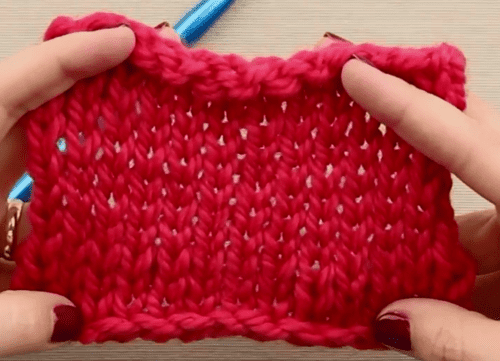
Stockinette stitch is one of the most recognizable knitting patterns. It is created by knitting one row and purling the next.
This stitch produces a smooth, polished fabric that is commonly used in garments like sweaters, hats, and baby clothes. The front of the fabric shows neat “V” shapes, while the back has a textured appearance.
One thing to keep in mind is that stockinette stitch tends to curl at the edges. Many patterns include borders or additional stitches to prevent this.
Once you’ve mastered knit and purl stitches, stockinette becomes second nature and opens the door to more advanced projects like sweaters and accessories.
Some patterns that use the stockinette stitch are:
Easy Baby Sweater Knitting Pattern
Easy Summer Sweater Knitting Pattern
Baby Bunny Hat Knitting Pattern
How to Knit the Stockinette Stitch
Cast on any number of stitches. Knit every stitch across the first row, then turn your work and purl every stitch across the next row. Continue alternating between knit rows and purl rows.
Stockinette stitch creates a smooth fabric with “V”-shaped stitches on the front and a bumpy texture on the back.
Seed Stitch
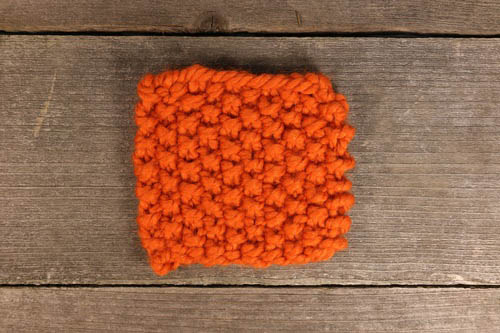
Seed stitch is a simple but beautiful textured stitch created by alternating knit and purl stitches in a specific pattern. It produces a slightly raised, bumpy fabric that looks similar to scattered seeds, which is how it gets its name.
Unlike rib stitch, where the pattern stays the same on every row, seed stitch requires you to alternate the stitches on each row. If a stitch appears as a knit, you purl it on the next row, and if it appears as a purl, you knit it. This creates a balanced, textured fabric that lies flat and does not curl at the edges.
Seed stitch is a great next step after learning knit and purl because it helps you recognize stitches and understand how they interact. It’s commonly used for scarves, blankets, borders, and even sweaters because of its classic, timeless look.
You’ll often see seed stitch featured in beginner-friendly projects because it adds visual interest without being complicated. It also pairs well with other basic stitches, making it a versatile technique to include in your knitting toolkit.
If you’re looking to practice seed stitch, try incorporating it into simple projects like scarves or dishcloths before moving on to larger patterns like hats or sweaters.
Patterns that Use the Seed Stitch:
Seed Stitch Baby Hooded Sweater Knitting Pattern
Kid’s Seed Stitch Poncho Knitting Pattern
Seed Stitch Pillow Knitting Pattern
Men’s Flat Knit Seed Stitch Hat
How to Knit Seed Stitch
To create seed stitch, you will alternate knit and purl stitches across each row, and then reverse them on the next row. This means you are always knitting the purl stitches and purling the knit stitches as they appear.
This constant alternation is what creates the textured, “seeded” effect.
Basketweave Stitch
Basketweave stitch is a classic textured knitting pattern that creates a woven, grid-like appearance by alternating blocks of knit and purl stitches. The pattern is typically worked over a set number of stitches and rows, forming small squares or rectangles that resemble a basket’s woven structure. This combination of knit and purl sections gives the fabric a raised, dimensional look that adds depth and visual interest to even the simplest projects.
One of the reasons basketweave stitch is so popular is because it is both beginner-friendly and visually impressive. While it uses only basic knit and purl stitches, the way they are arranged creates a more advanced-looking texture without requiring complicated techniques. It’s a great next step for knitters who are comfortable with the basics and want to explore new stitch patterns.
Basketweave stitch is also known for being thick, warm, and durable, making it ideal for cozy projects like scarves, blankets, dishcloths, and home decor pieces. The fabric lies relatively flat compared to stockinette stitch and has a structured feel that holds its shape well over time. Because of its texture, it also works beautifully with solid-colored yarns where the pattern can really stand out.
This stitch pattern is versatile and can be adjusted by changing the size of the knit and purl blocks, allowing you to create larger or smaller “woven” sections depending on your project. Whether you’re making a simple scarf or a statement blanket, basketweave stitch adds a timeless, handmade look that elevates your knitting.
Some popular patterns that use the basketweave stitch:
Mens Basketwevae Hat Knitting Pattern
How to Knit the Basketweave Stitch
Cast on a multiple of 8 stitches. For the first four rows, knit 4 stitches, then purl 4 stitches across the row. For the next four rows, reverse the pattern by purling 4 stitches, then knitting 4 stitches. Repeat these eight rows.
Basketweave stitch creates a textured pattern that looks like woven squares and is perfect for scarves, blankets, and cozy knit projects.
Linen Stitch
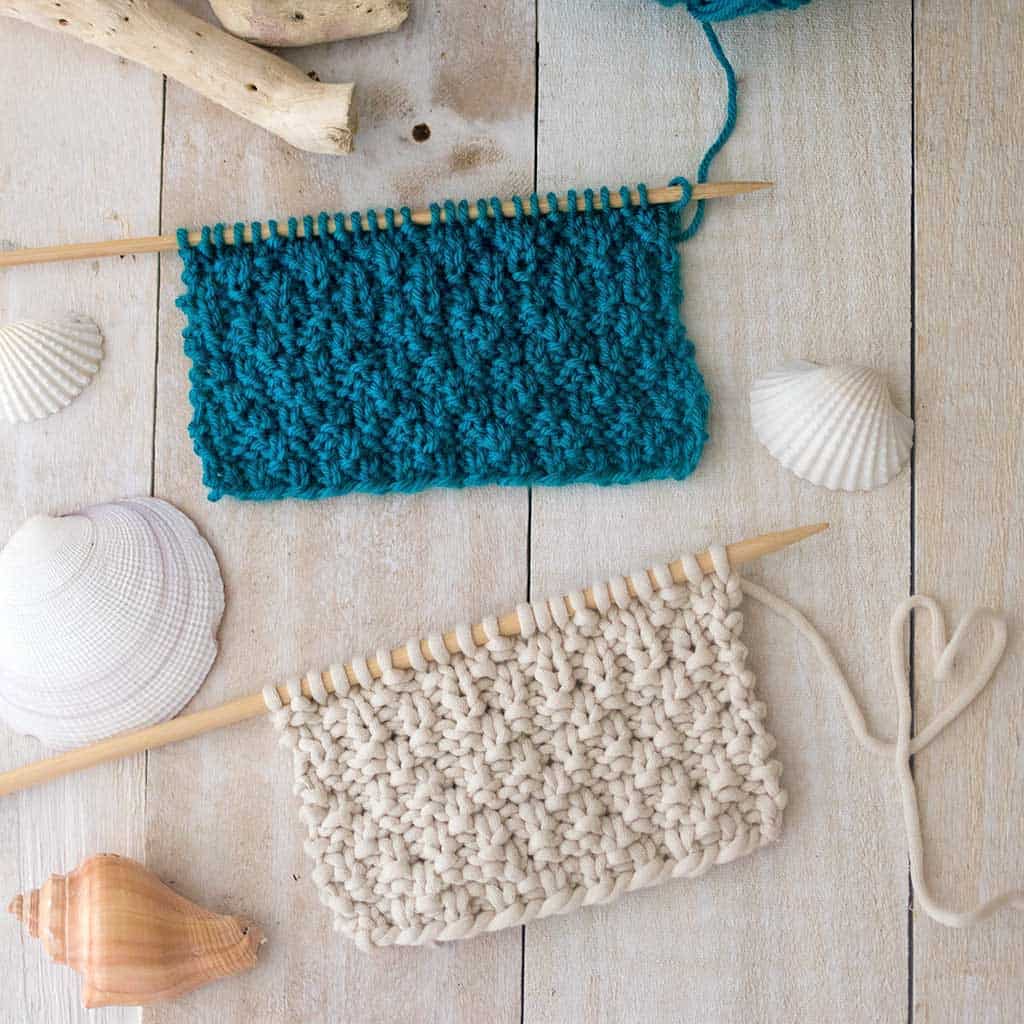
The linen stitch, sometimes referred to as the fabric stitch, is a slipped stitch knitting pattern which creates a dense and finely detailed stitch. Once complete, the fabric will look almost woven. The linen stitch is ideal if you’re interested in making a warmer garment or if you’re using a stiffer fabric that does not curl.
In the linen stitch, you slip every other stitch and knit (or purl) every other stitch. At the same time, you carry the yarn in front of the slipped knit stitch on the right side of the work or behind the slipped purl stitch on the wrong side of the work.
The linen stitch is an ingenious stitch pattern that can result in different looks simply by changing the color scheme. The stitch also looks great in variegated and self-striping yarns.
How to Knit the Linen Stitch
Cast on an even number of stitches. On the first row, knit one stitch, then bring the yarn to the front and slip the next stitch purlwise. Continue across the row. On the next row, purl one stitch, then bring the yarn to the back and slip the next stitch knitwise. Repeat these two rows.
Linen stitch creates a dense, woven texture that looks similar to fabric and is perfect for scarves, dishcloths, and home decor projects.

Tips for Practicing Beginner Knitting Stitches
When learning new stitches, it’s important to take your time and practice regularly. Repetition is the key to building muscle memory and improving your technique.
Start with small swatches before moving on to full projects. This allows you to focus on the stitch itself without worrying about shaping or sizing.
Using the right yarn and needles can also make a big difference. A medium-weight yarn and smooth needles are often easiest for beginners to work with.
If you make a mistake, don’t be discouraged. Knitting is very forgiving, and learning how to fix errors is part of the process.
Easy Projects to Practice These Stitches
Once you’ve learned these five basic stitches, the best way to improve is by making simple projects. This helps reinforce your skills while creating something useful.
Beginner-friendly projects to try include scarves, hats, and small accessories. You can explore patterns like the Beginner Flat Knit Kid’s Hat, Flat Knit Baby Booties, and Easy Flat Knit Plush Cat Knitting Pattern to continue building your skills.
You can also browse more ideas in my Free Knitting Patterns Collection, where you’ll find projects for every season and skill level.
Frequently Asked Questions
What is the easiest knitting stitch for beginners?
The knit stitch is the easiest and most beginner-friendly stitch to learn. It forms the foundation of many patterns and is used to create garter stitch when repeated across every row.
How long does it take to learn basic knitting stitches?
Most beginners can learn the knit and purl stitches in a single afternoon with practice. Becoming comfortable with these stitches may take a few days, but consistent practice will quickly improve your skills.
Do I need to learn all five stitches right away?
No, you can start with just the knit stitch and gradually add the others as you become more comfortable. Many beginner projects use only one or two stitches, so you can begin creating right away.
Why does my knitting look uneven?
Uneven knitting is usually caused by inconsistent tension. This is very common for beginners and improves with practice. Try to keep your yarn tension consistent and avoid pulling stitches too tight or too loose.
What is the difference between knit and purl stitches?
The knit stitch creates a smooth “V”-shaped texture, while the purl stitch creates a bump. These two stitches are opposites and are often combined to create different patterns and textures.
What should I make after learning these stitches?
After mastering these stitches, you can move on to beginner projects like hats, scarves, and simple garments. Patterns like the Flat Knit Hat or Easy Garter Stitch Projects are great next steps.
Learning these 5 basic knitting stitches for beginners is the first step toward becoming a confident knitter. Once you understand how these stitches work, you’ll be able to follow patterns, create beautiful textures, and start exploring more advanced techniques.
Knitting is a skill that builds over time, and every project helps you improve. Start simple, practice often, and enjoy the process of creating something by hand.
Now that you have a few new stitches to try out, why not learn about the best knitting tools for beginners? Be sure to check out Beginning Knitting Supplies: The Ultimate Knitting Tools List. This comprehensive guide will ensure you start knitting with the proper materials at your disposal.
Thank you for sharing the post! I can knit the first and second stitches, and I'll learn the last three right today. Thank you for sharing the tutorials!!
gmail sign in